Why NATIVE Plants Deserve All the Buzz!
There’s a lot of buzz around native plants — and rightfully so!
Native plants are everything you want in a plant and then some. They’re not just beautiful; they’re essential. From feeding caterpillars and pollinators to supporting song-birds and small mammals, native plants are true workhorses — and often showstoppers in the landscape.
Whether you’re adding a single plant or building a full pollinator patch, it’s easy to incorporate natives into your yard.
LOOKING FOR A NATURAL SCREEN?
Before reaching for arborvitae, consider these native alternatives that offer beauty and ecological benefits:
-
Lindera benzoin (Spicebush) – Great for screening and a vital larval food source for the spicebush swallowtail butterfly.
-
Corylus americana (American Hazelnut) – Fantastic fall color, durable, and produces edible nuts.
-
Hamamelis vernalis/virginiana (Witch Hazels) – Vernalis blooms early for early-emerging pollinators; virginiana extends bloom into fall. Excellent for privacy and habitat.
-
Viburnum dentatum (Arrowwood Viburnum) – Clean, uniform structure with fall color and great pollinator support.
-
Viburnum prunifolium (Blackhaw Viburnum) – Dense growth up to 15′ tall, stunning fall color, white spring flowers.
GOT A SUNNY SPOT? PLANT FOR POLLINATORS!
Before planting the non-native butterfly bush – you should consider these options:
-
Liatris aspera (Rough Blazing Star) – Purple flower spikes adored by butterflies and bees.
-
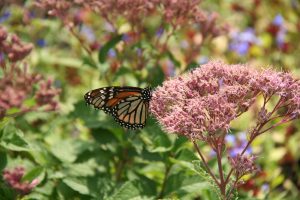
Eutrochium maculatum (formerly Eupatorium maculatum) – (Joe Pye Weed) – 4–6′ tall and a butterfly magnet!
-
Agastache foeniculum (Anise Hyssop) – Easy to grow, and beloved by bees, butterflies, and hummingbirds.
-
Eryngium yuccifolium (Rattlesnake Master) – Besides having the coolest name, this plant has a unique structure and is a favorite of smaller pollinators, moths, and butterflies.
-
Sporobolus heterolepis (Prairie Dropseed) – A native grass that’s easy to incorporate into pollinator gardens. Larval food for butterflies, and a great natural edge.
-
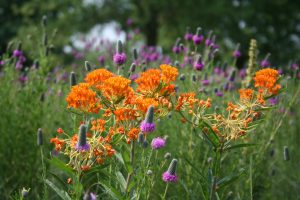
Asclepias species (Milkweeds) – Don’t stop at the common few! Illinois is home to 24 native milkweed species. All are critical nectar sources and essential larval food for monarch butterflies.
DON’T FORGET ABOUT NATIVE TREES!
When thinking about pollinator patches, I would be remiss if I didn’t mention the importance of native trees to pollinators! Native trees like Oaks feed more species of Lepidoptera (the class of insects includes butterflies, moths and skippers) than anything else!
Many people hesitate to plant an oak, thinking it will grow too slowly. While oaks may not be the fastest-growing trees, they are certainly not slow.
More often than not, when an oak—or any tree, really—seems to be growing slowly, it’s because its needs aren’t being met. This could mean a lack of water during dry periods, or some form of stress such as:
-
being planted too deeply,
-
grown in a container with circling roots,
-
damaged by lawn mowers or string trimmers,
-
or browsed by deer.
When planted correctly and cared for, oaks grow at a steady, reliable pace—and bring immense value to any landscape, especially for wildlife and pollinators.
There are 21 species of oak native to Illinois, and we grow 7 of them (sometimes more!). Here are a few standout native oaks that can enrich the pollinator habitat in your yard:
READY TO GO NATIVE?
There are so many exciting opportunities when planting with native species — and we’re here to help!
From perennials and grasses to shrubs, trees, and spring ephemerals, we grow a wide selection of natives to fit your yard and your goals.
Stop by, check out our plants, and chat with us about why we’re so passionate about natives!
WE ARE OPEN YEAR-ROUND, HOURS CHANGE SEASONALLY!
SUMMER HOURS
MON-FRI: 8AM-5PM
SAT: 8AM-12PM
SUNDAY: CLOSED