
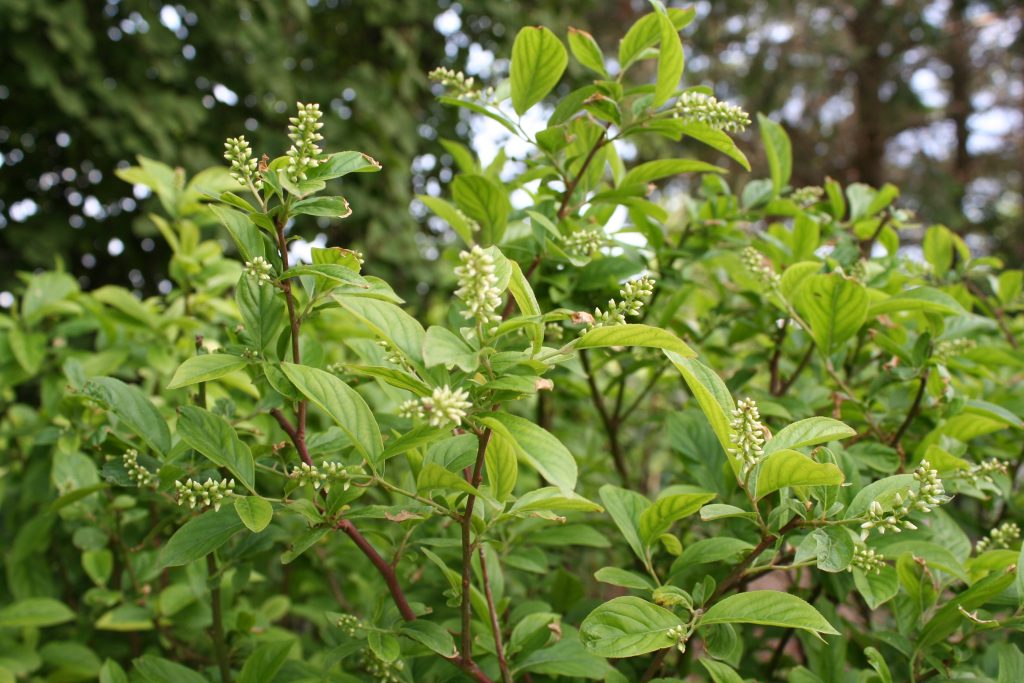
Planting season is just around the corner, and it’s the perfect time to spotlight some of the native shrubs we grow here at the garden center! These versatile shrubs can be used in foundation plantings, as specimen shrubs, or to create a beautiful shrub border.
Native shrubs are powerhouses for pollinators, and most are larval food sources. Larval food sources are perhaps the most important plants to include in your landscape! Not only do these plants support butterflies and moths (Lepidoptera species), but they also support bird populations. That means you can feel extra good about adding these native shrubs to your yard!
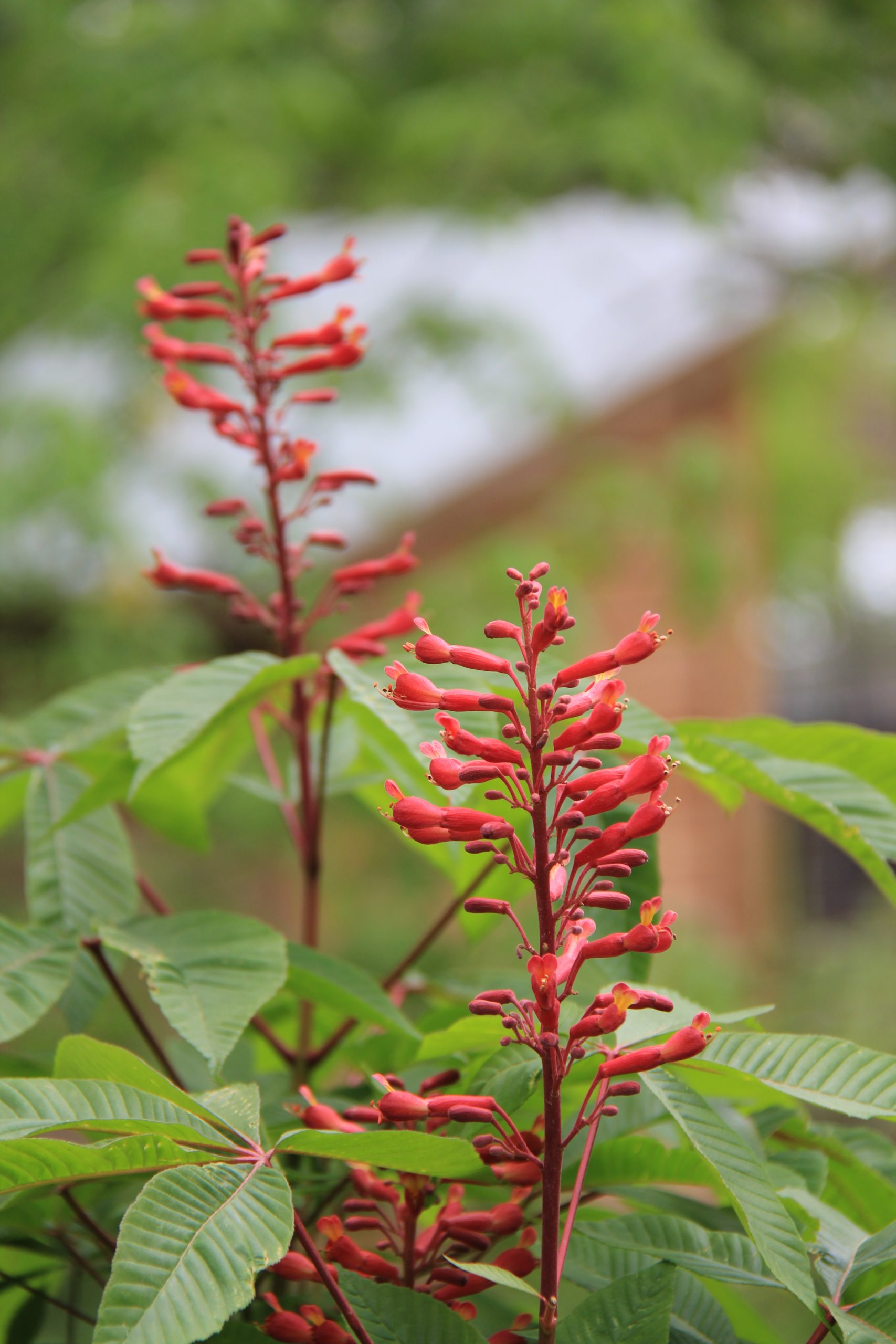
Aesculus pavia – Red Buckeye
- Grows 12-15’ tall, red flowers in April/May, full sun to part shade
- Easy to grow in most soil, can defoliate in hot, dry weather. Plant in afternoon shade to alleviate scorch.
- Larval food source for 37 species of Lepidoptera including the imperial moth and polyphemus moth. Fantastic nectar source for hummingbirds and other pollinators!
Why to LOVE it? Red buckeye is such a fun plant! It makes a great specimen plant and works well as a small tree/large shrub in any landscape. The flowers are stunning, the hummingbirds really do love it, and so do the bees…..but possibly the most fun is providing a larval food source for the large moths! Once you’ve seen the giant moths up close, and appreciated their intricate markings – you’ll be hooked on providing for them too!
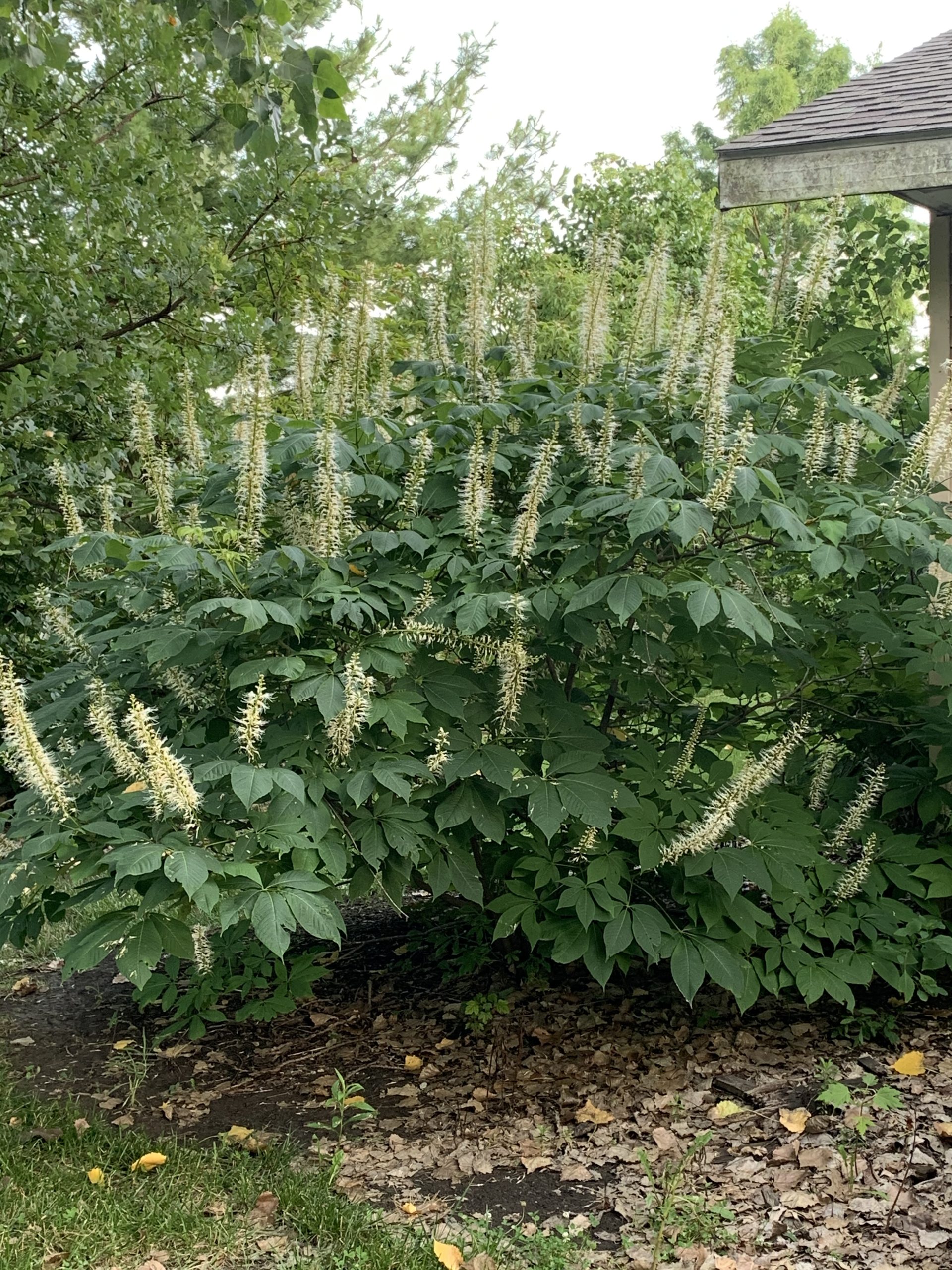
Aesculus parviflora- Bottlebrush Buckeye
- Grows 8-12’ tall, white flowers in June/July, full sun to part shade
- Easy to grow in most soils
- Larval food source for over 30 species of Lepidoptera, and the flowers offer a tremendous nectar source for hummingbirds and other pollinators
Why to LOVE it? Bottlebrush buckeye is a fantastic addition to most yards! A shady under tree, a specimen small tree/large shrub, in a shrub border- bottlebrush buckeye fits the bill! The white flowers are fantastic for hummingbirds and other pollinators, while the foliage is a larval food source for moths and butterflies! What could be better?
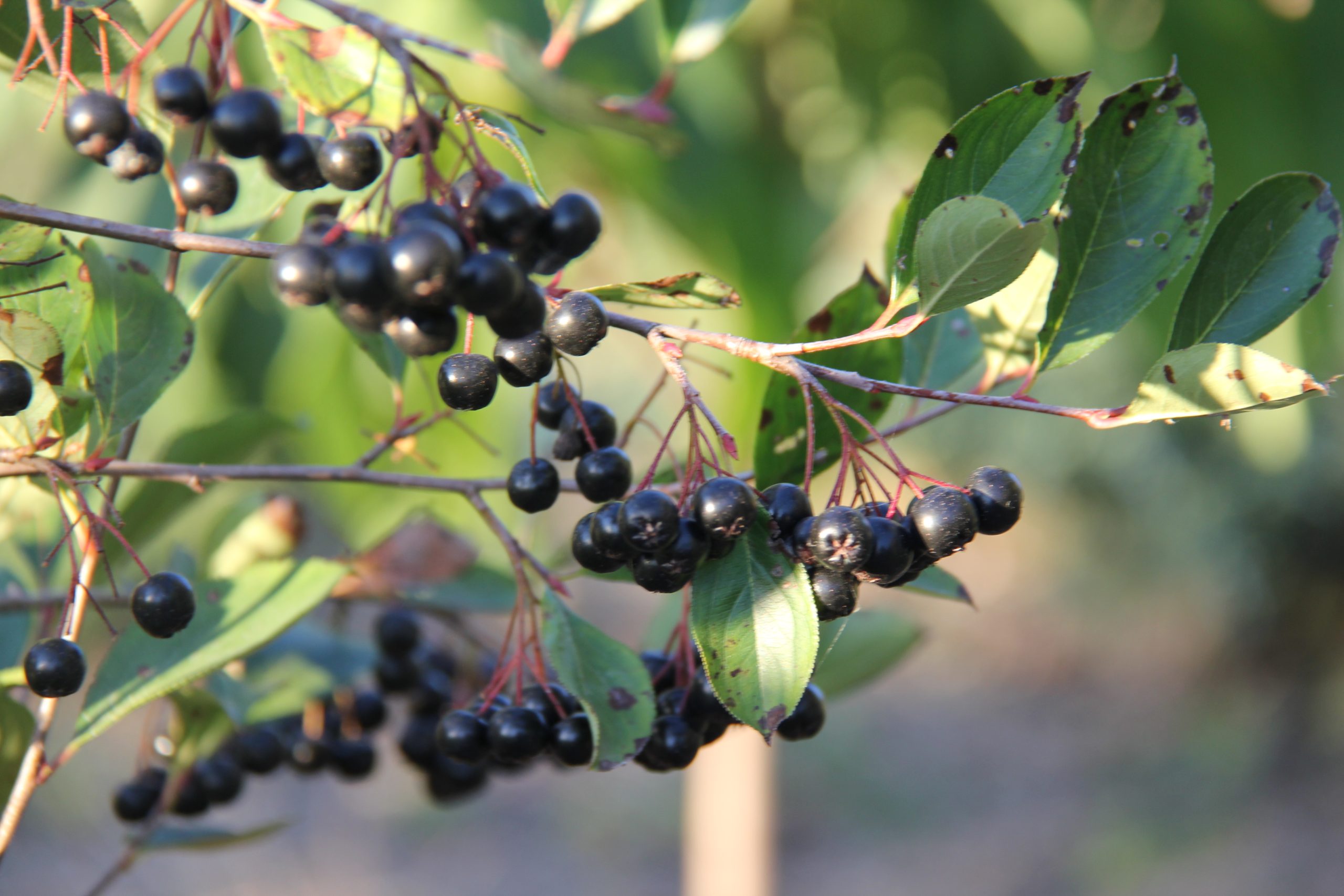
Aronia meloncarpa – Black Chokeberry
- Grows 3-6’ tall, white flowers in May, stunning fall color, full sun to part shade
- Easy to grow in most soils, can even tolerate boggy areas
- Larval food source for over two dozen species of native insects- including moths & butterflies
Why to LOVE it? Hack out that old invasive burning bush and plant some black chokeberry! The fall color of Aronia is nothing less than spectacular and you get white flowers in the spring! PLUS it’s a larval food source – winner, winner, chicken dinner!
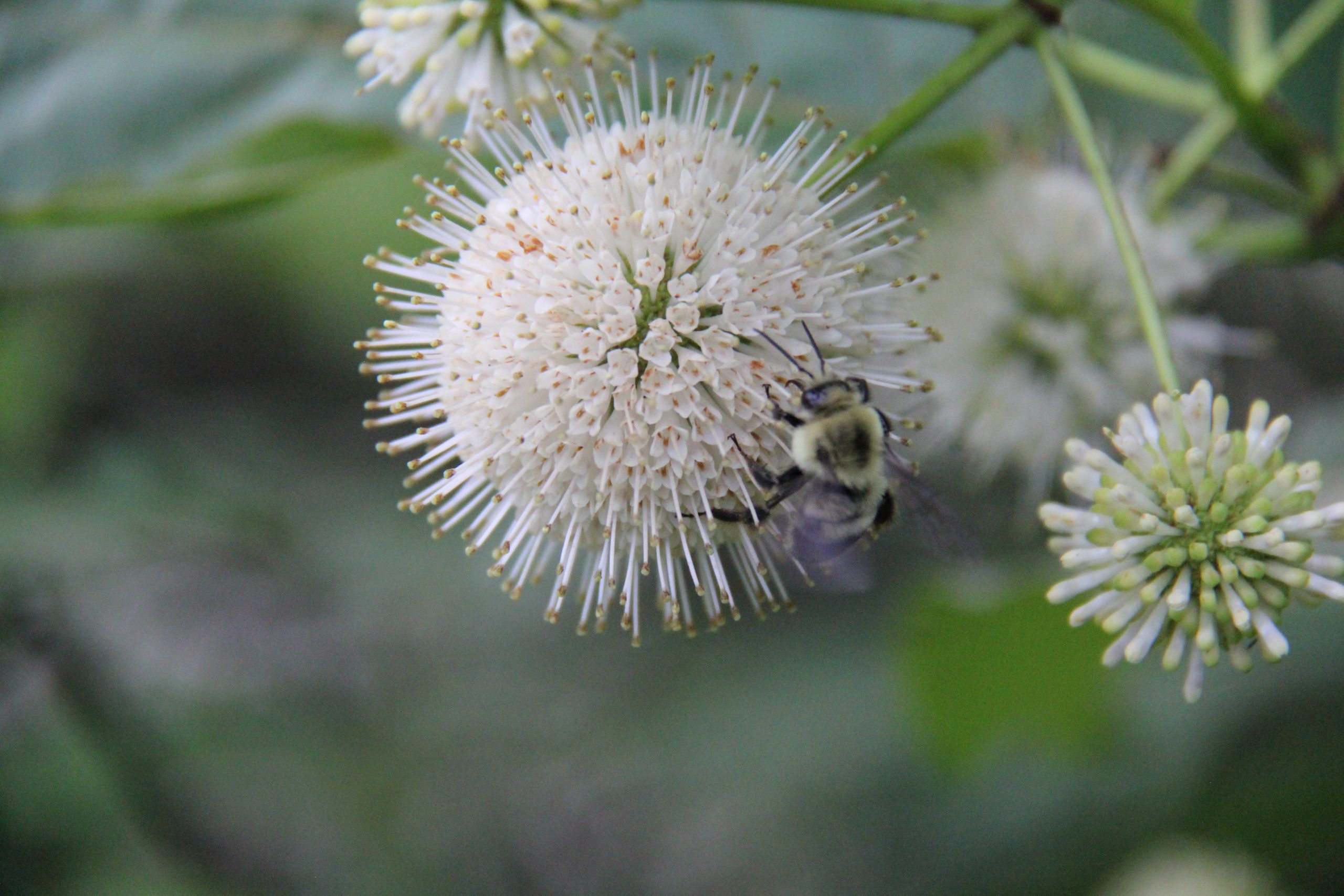
Cephalanthus occidentalis – Button Bush
- Grows 4-6’ tall, white, fragrant, pin cushion flowers in June, yellow fall color, full sun to part shade
- Easy to grow in most soils including wet soils and boggy areas! It does not appreciate a dry soil.
- Larval food source for several moth species.
Why to LOVE it? You have never seen flowers like this! The perfectly round, white flowers look like a pincushion and are super attractive to pollinators of all kinds! Its glossy foliage is not only appealing to several moth species, but is a treat in the landscape.
Corylus americana- Hazelnut
- Grows 6-12’ tall, catkins in March/April, red/purple fall color, full sun to part shade
- Easy to grow in most soils, will naturalize. Female shrubs will produce hazelnuts when males are present.
- Larval food source for over 100 species of Lepidoptera, including the polyphemus moth. Luna moth, cecropia moth and various butterflies. The hazelnut is desirable for both humans and wildlife.
Why to LOVE it? Hello hazelnuts – YUM! Not only do you get to produce your own hazelnuts (they are small, but oh so tasty!) you also get to feed a whole lot of species of moths and butterflies! There is no better way to attract butterflies to your yard than providing larval food sources, and this is a great plant to do it!
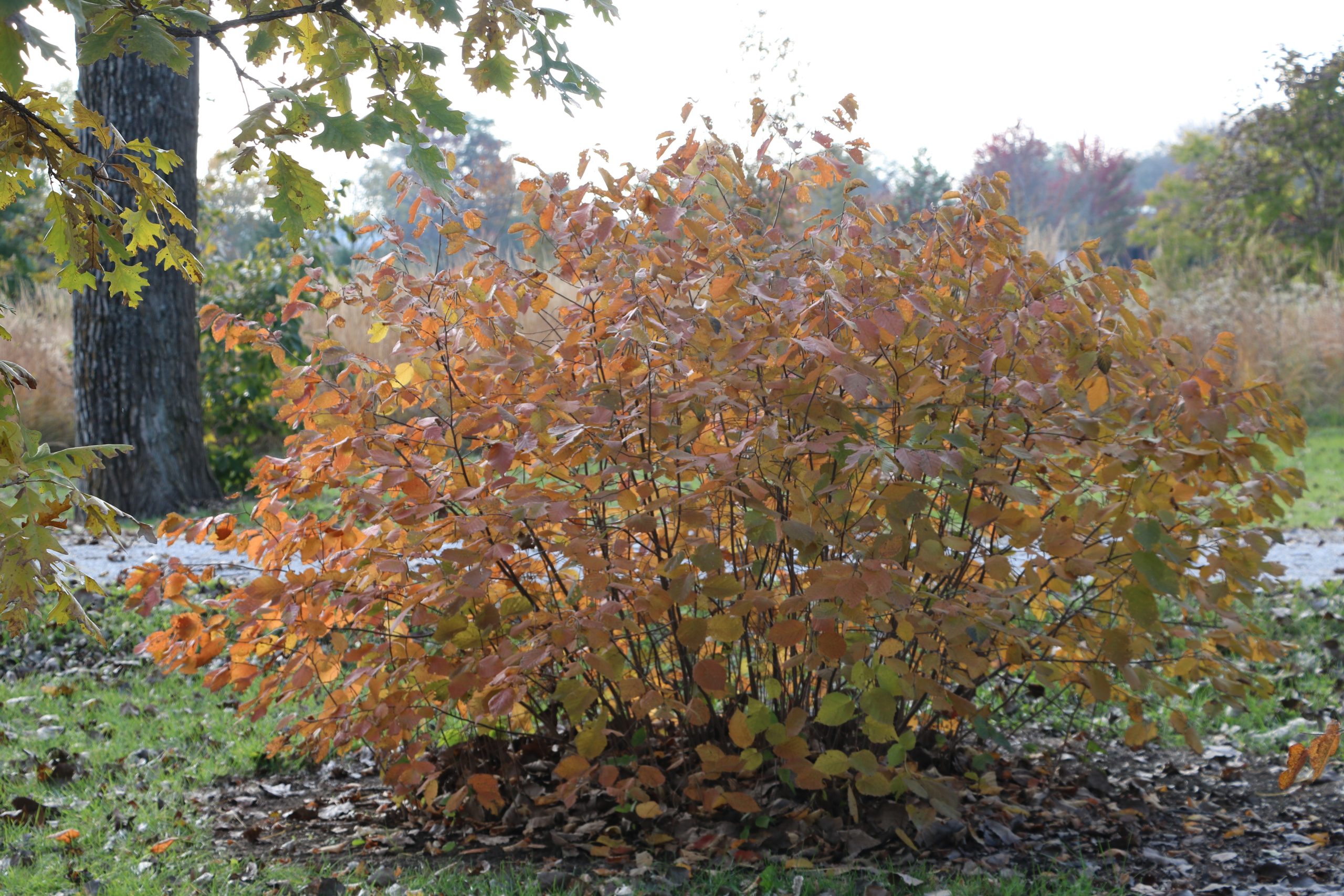
Diervilla lonicera- Bush Honeysuckle (not to be confused with Japanese Honeysuckle)
- Grows 2- 3’ tall, yellow flowers in June/July, excellent fall color
- Easy to grow in most soils, will naturalize, full sun to part shade
- Larval food source for several species of moths, the yellow flower are great for pollinators and the habit of the shrub can for a thicket that is crucial for ground nesting birds.
Why to LOVE it? Got shady banks or barren spots under trees? Diervilla offers a great alternative to non-native ground covers. The yellow flowers are small but very attractive, and the fall color is quite nice, especially if it catches a little sunshine.

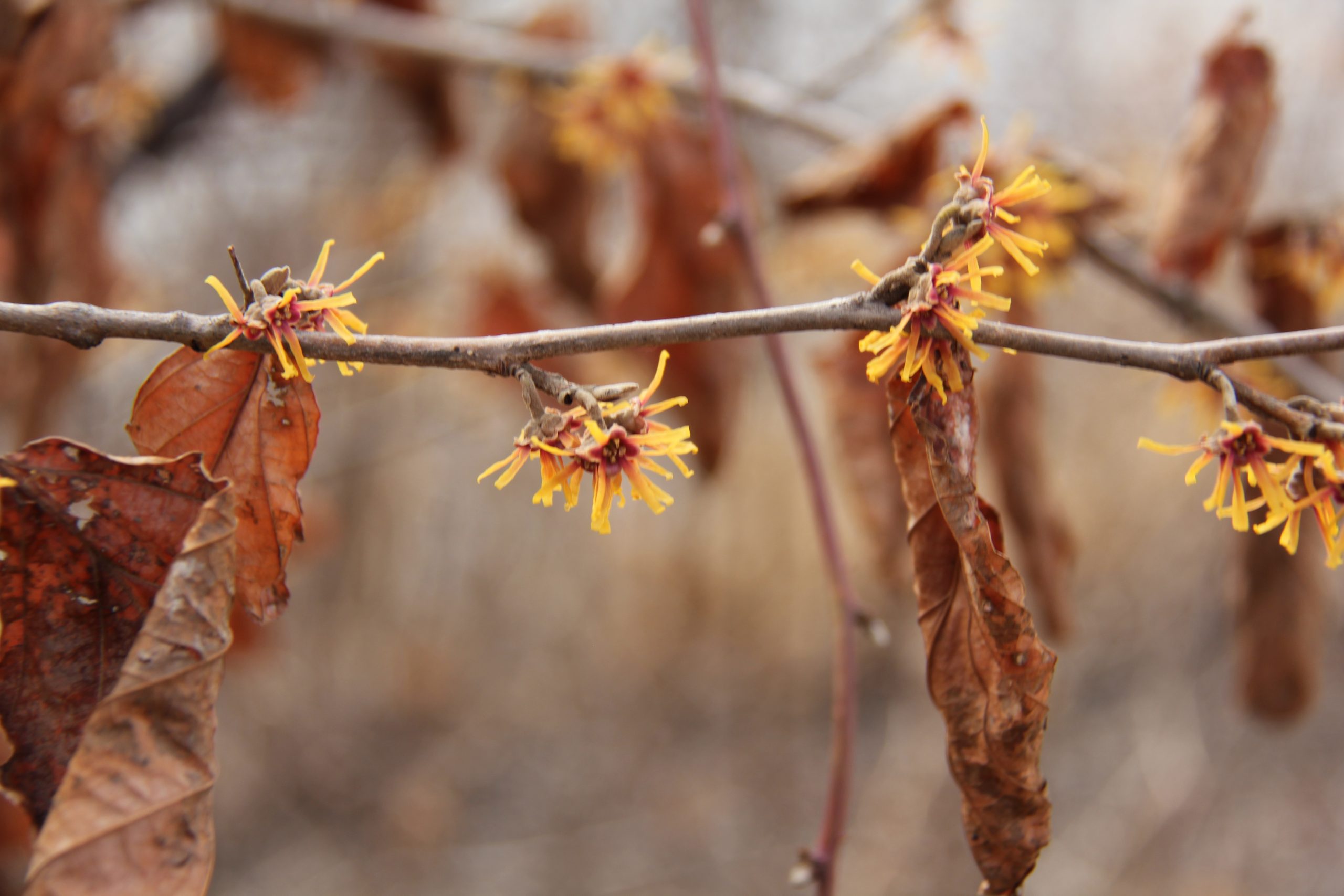
Hamamelis vernalis – Ozark Witch hazel
- Grows 6-10’ tall, yellow/red flowers January to April, full sun to part shade
- Easy to grow in most soils
- Larval food source for several species of moths, early flowers of the vernal witch hazel provide one of the first nectar sources for early emerging bees
Why to LOVE it? The best blooms February has to offer! Supporting early emerging bees is critical to their survival, and what better way to do it then by planting a super cool shrub that is not only beautiful but functional!
Itea virginiana – Virginia Sweetspire
- Grows 3-5’ tall, white flowers from June to July, full sun to part shade
- Easy to grow in most soils, adaptable to shade- but fall color is best in more sun.
- While not a known larval food source, its flowers are a great nectar source for pollinators!
Why to LOVE it? Easy to incorporate into almost any foundation planting! Its smaller size offers a great nectar source in the middle of summer when many woody plants are already done blooming. Then there’s the fall color – talk about a show stopper!
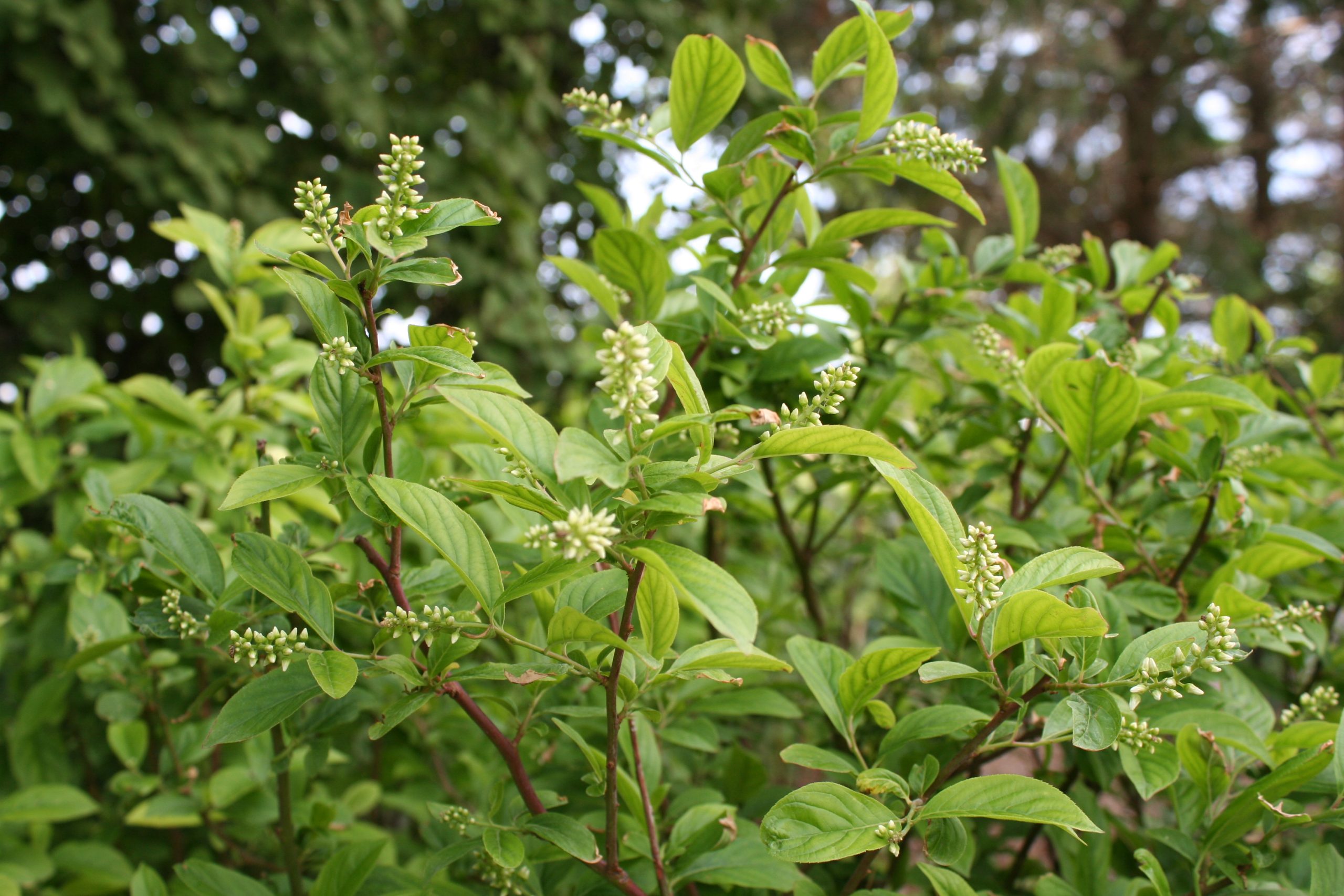
Lindera benzoin- Spicebush
- Grows 6-12’ tall, yellowish flowers in March, yellow fall color, red berries on female plants in fall, full sun to part shade
- Easy to grow in most soils
- Larval food source for the spicebush swallowtail
Why to LOVE it? Whether you use it as a privacy hedge, or a specimen plant – you need a spicebush or two in your life. The flowers are a welcome site in March, the red berries change the seasons for you in the fall AND perhaps the most exciting part is being able to find spicebush swallowtail caterpillars all rolled up in a leaf!
